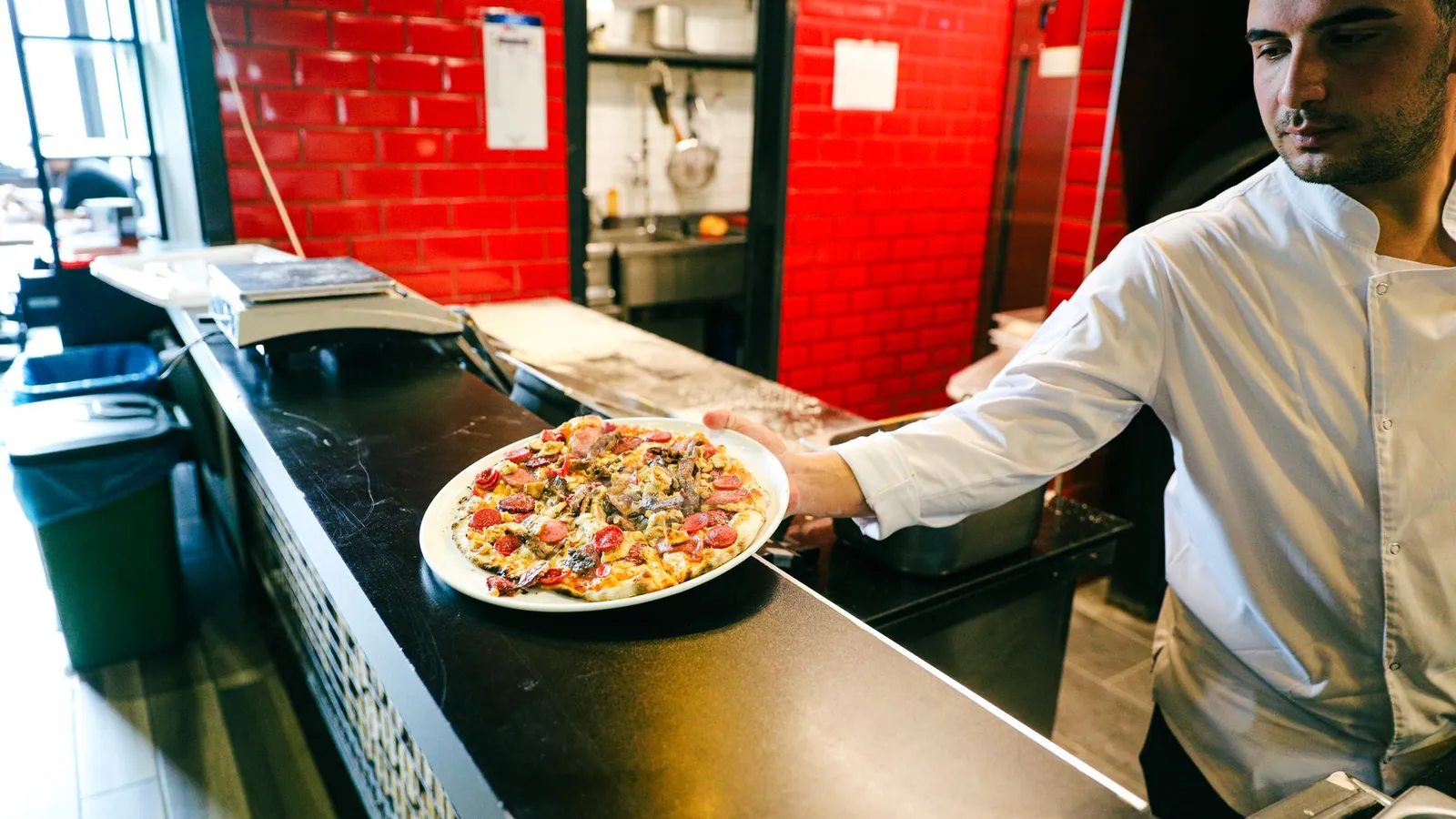
Restaurant staff paging plan for a flat-hiring holiday
The busy season is starting, and the latest federal jobs data shows restaurant hiring barely moving. One practical response is to cut the wasted steps inside the crew you already have. Staff paging (kitchen-to-server, host-to-server and manager calls) is one of the cheapest places to find those minutes.
What the September jobs report shows
The U.S. Bureau of Labor Statistics published The Employment Situation for September 2026 on Friday, October 2, 2026. Total nonfarm payrolls rose by 29,000 and the unemployment rate was 4.2 percent. BLS says employment "changed little" in every major industry, leisure and hospitality included. It also revised July and August down by a combined 60,000 jobs.
For restaurants, the detail is in Table B-1. Seasonally adjusted employment at food services and drinking places was 12,393,000 in September 2026. That is up 10,800 from August and up about 109,000 (roughly 0.9 percent) from September 2025. The industry is still adding people, but slowly.
Labor cost is rising faster than headcount. In Table B-3, average hourly earnings for all leisure and hospitality employees were $23.90 in September 2026, up from $23.00 a year earlier, an increase of about 3.9 percent. The average private-sector increase over the same 12 months was 3.0 percent. Table B-2 puts the average leisure and hospitality workweek at 25.5 hours.
The October report is due on November 6, 2026. One month's data is not a forecast. Still, the September numbers fit what many operators already plan around: hiring is slow, each labor hour costs more, and the holidays will lean on the people already on the schedule.
Why staff paging matters more when the crew is thin
A lot of floor time goes to finding out whether something is ready, not to doing work. Servers walk to the pass to see if food is up. Hosts walk the floor looking for the server whose table just cleared. Managers get pulled to the front by someone shouting across the room. Each trip is small. Across a shift and a crew, they add up to real hours.
A two-way or staff paging setup replaces those check-in trips with a signal. The kitchen presses a button and the server's pager or watch vibrates with a code. The server walks to the pass once, when the food is actually there. Our guide to two-way paging covers how these systems work. This article is about sizing the benefit before the holiday rush, so you can decide whether to buy, repair or simply reconfigure.
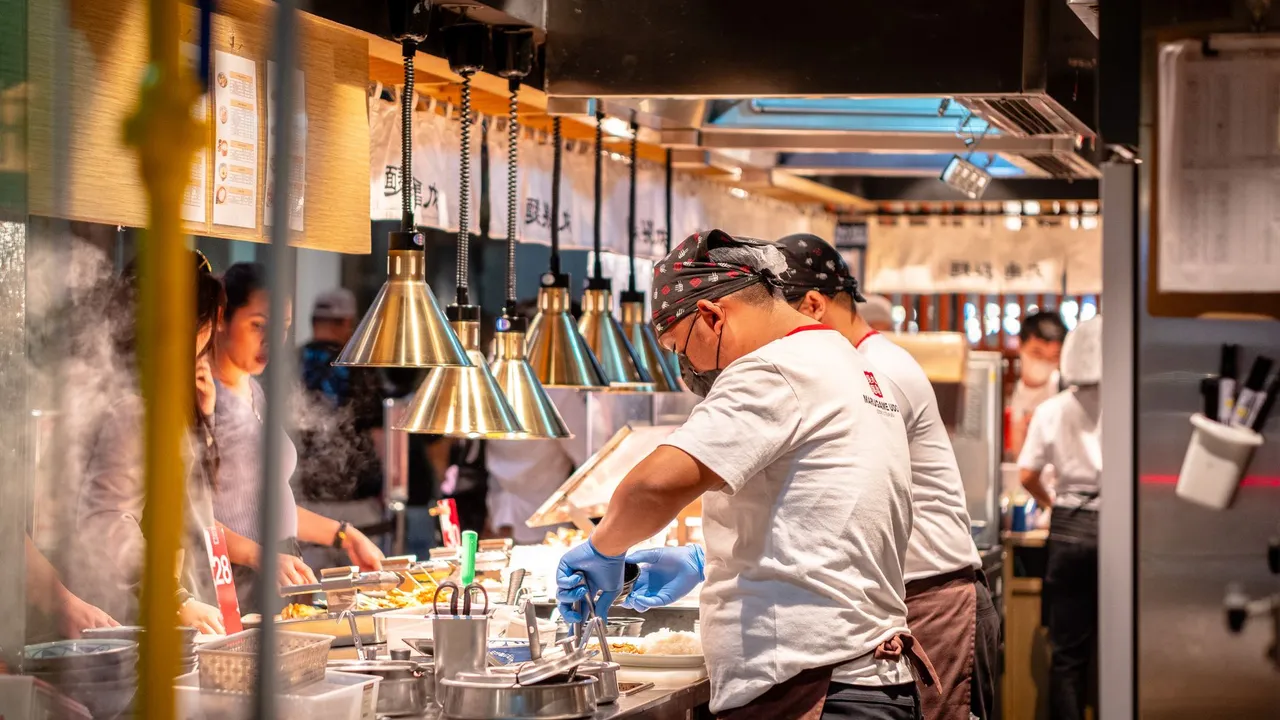
A worked example: putting a number on wasted trips
The figures below are assumptions for illustration. They are not measurements from any restaurant. Replace them with your own counts.
- Six servers on a five-hour dinner shift.
- Each server makes four trips per hour to the pass or the host stand that turn out to be unnecessary (food not up yet, nobody waiting).
- Each wasted trip, including walking and waiting, takes 45 seconds.
That is 4 × 45 seconds = 3 minutes per server per hour. Multiply by 6 servers and 5 hours and you get 90 minutes, or 1.5 labor hours, per shift.
To price it, use the BLS leisure and hospitality average of $23.90 an hour: 1.5 × $23.90 = about $35.85 per shift. Over 30 dinner shifts that is 45 hours and about $1,075. Forty-five hours is roughly 1.8 times the average 25.5-hour leisure and hospitality workweek. In other words, it is close to two weeks of one average employee's hours, spent walking to check on things.
Two cautions. First, the BLS figure covers all leisure and hospitality employees, not servers specifically. Tipped server wages work differently, so use your own blended labor cost if you have it. Second, paging does not remove every trip. It removes the trips made only to check. The honest way to estimate your savings is to count trips for one shift before you change anything.
How to count your own wasted trips
- Pick one normal busy shift and one observer: a manager, or an off-duty staff member paid for the time.
- Stand where you can see the pass. Tally each time a server arrives and leaves without food. Do the same at the host stand.
- Time ten of those trips with a phone stopwatch and average them.
- Do the math above with your real counts, real shift length and real blended wage.
- Write the number down. That is the ceiling on what a staff paging change can save each shift.
Decision table: which call goes on which device
Staff paging works best when each call has one meaning and one recipient. Before the rush, agree on a short code list and program it into your transmitters.
| Situation | Who sends | Who receives | Suggested signal |
|---|---|---|---|
| Food up at the pass | Expo or line | The table's server | Code 1, single vibration |
| Table cleared and reset | Busser | Host | Code 2 |
| Party seated in your section | Host | Server | Code 3 |
| Guest asking for a manager | Server or host | Manager on duty | Code 4, repeat until acknowledged |
| Allergy or ticket question | Line | Server, then manager if no response | Code 5, escalate after 60 seconds |
| Help needed in a hurry | Anyone | All managers | Dedicated code, never used for anything else |
Keep the list short enough that a seasonal hire can learn it on the first shift. If your devices show text, use the text. If they only vibrate, use vibration patterns and post the legend at the pass.
Pre-holiday hardware checklist
- Count devices against peak staffing. Count your heaviest scheduled shift (Thanksgiving week, office-party nights, New Year's Eve), not an average night. Add a few spares for devices that are charging or lost.
- Check batteries on every unit. Charge each staff pager fully and leave it on through one full shift. Units that die early get replaced or sent for battery service before the rush, not during it.
- Test range where staff actually go. Send a page to a unit in the far corner of the patio, the walk-in cooler, the basement storage room and the parking lot. Note any dead spots and decide whether to move the transmitter, add a repeater if your system supports one, or change the rule for those spots.
- Clean and check chargers. Inspect charging contacts and cradles. A bad cradle can leave a whole row of pagers dead at the start of a shift.
- Label the transmitters. Put the kitchen transmitter at the pass and the host transmitter at the stand. Label each one with the code list.
- Plan the fallback. Decide what staff do if the system goes down mid-shift: a bell, a runner, or the expo calling names. Write it on the same card as the codes.
- Train seasonal hires on day one. Hand out the device, run through the codes and send a test page. It is a short step that saves confusion on a busy night.
Connecting staff paging to the rest of the floor
Staff paging and guest paging share the same goal: one signal at the right moment instead of repeated checking. If you also use guest pagers, check that the two systems do not share codes or confuse new staff. Where guest paging ties into the point of sale, the host sees the seating chart change when a table is marked ready. KwickOS, for example, connects its guest paging module to the KwickOS POS seating chart. Whatever system you use, the rule is the same: fewer trips to check, more time for the guests at the table.
What to do this week
- Count wasted trips on one busy shift and do the arithmetic with your own numbers.
- Write a code list of six or fewer calls, with one dedicated urgent code.
- Run the hardware checklist and order replacements now. That way they arrive before the rush, not during it.
- Re-check against the November 6 BLS release. If restaurant hiring stays flat, plan your holiday schedule around the crew you have.
Frequently asked questions
How much did restaurant employment grow in September 2026?
According to BLS Table B-1, seasonally adjusted employment at food services and drinking places was 12,393,000 in September 2026. That is up 10,800 from August and about 109,000 (roughly 0.9 percent) from September 2025.
What is staff paging in a restaurant?
Staff paging sends a signal, usually a vibration or a short code on a pager or watch, from one team member to another. Examples are the kitchen telling a server that food is up, or a host telling a server that a party has been seated. It replaces trips made only to check whether something is ready.
How do I estimate whether staff paging is worth it?
Watch one busy shift and count the trips servers make to the pass or host stand that end with nothing to pick up. Time a sample of those trips, then multiply trips per hour x seconds per trip x number of servers x shift hours. Price the result at your own blended labor cost. That figure is the most a paging change can save.
What should I check on staff pagers before the holidays?
Count devices against your busiest scheduled shift and add spares. Run every unit through a full shift on one charge. Test range in the patio, walk-in, storage areas and parking lot. Inspect the chargers, label the transmitters with your code list, and write down a fallback plan for when the system goes down.
When is the next BLS jobs report?
BLS says the Employment Situation for October 2026 is scheduled for Friday, November 6, 2026, at 8:30 a.m. Eastern.
Sources
- The Employment Situation - September 2026, U.S. Bureau of Labor Statistics, 2026-10-02
- Table B-1. Employees on nonfarm payrolls by industry sector and selected industry detail (2026 M09), U.S. Bureau of Labor Statistics, 2026-10-02
- Table B-2. Average weekly hours and overtime of all employees on private nonfarm payrolls by industry sector, seasonally adjusted (2026 M09), U.S. Bureau of Labor Statistics, 2026-10-02
- Table B-3. Average hourly and weekly earnings of all employees on private nonfarm payrolls by industry sector, seasonally adjusted (2026 M09), U.S. Bureau of Labor Statistics, 2026-10-02
- What Is a Two-Way Paging System? Staff-to-Staff Restaurant Paging Explained, RestaurantsPaging
- Restaurant Paging System | Smart Guest Pagers (home page, for the KwickOS POS integration mention), RestaurantsPaging / KwickOS
Checked November 3, 2026. Photo: Yusuf Çelik / Pexels.
Review the queue, not just the crowd
After every event, compare quote accuracy, notification failures, no-shows, walkaways, and table-ready delays. The next rush should start with evidence from the last one.